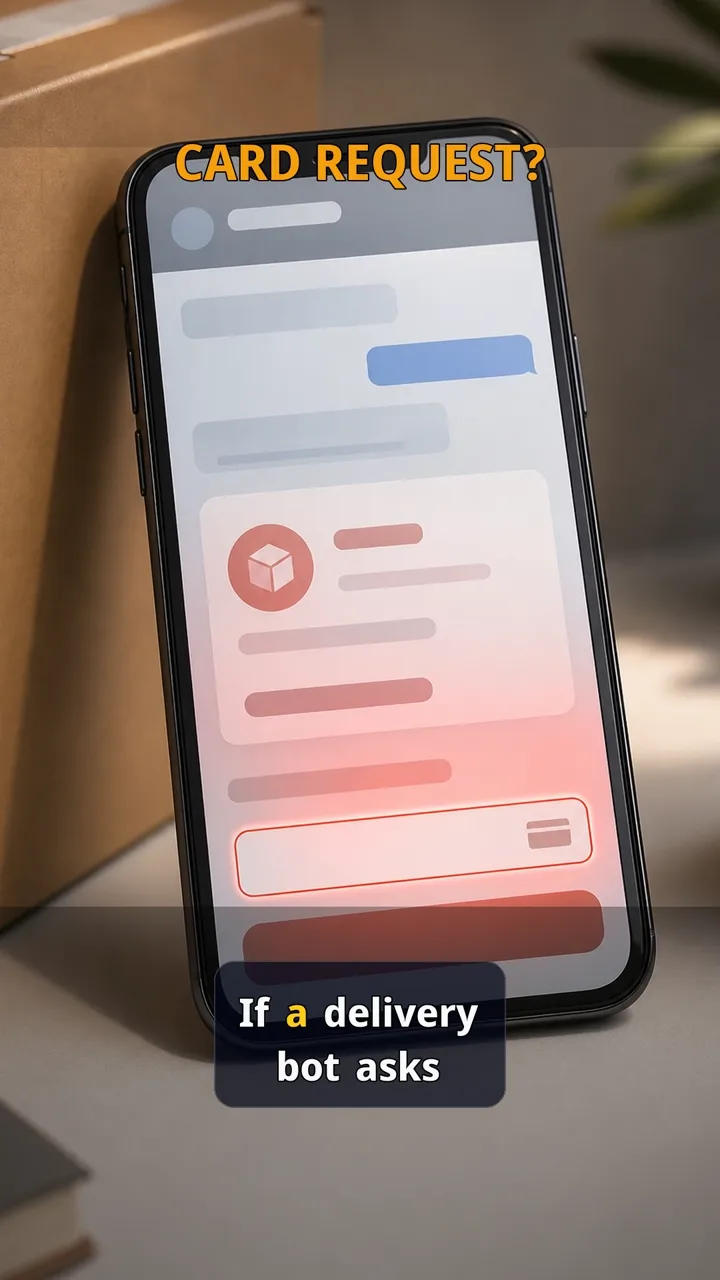
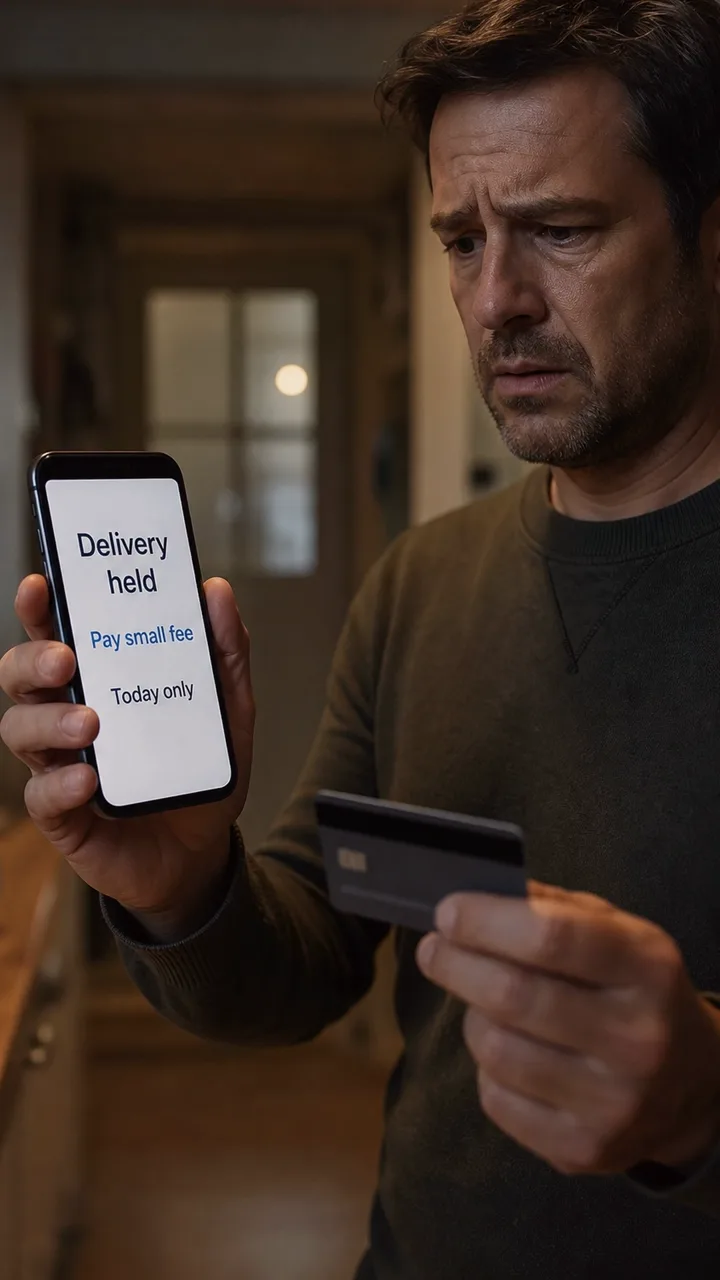
A refund should send money back. If a refund page asks for your full card number, expiry date, and CVC, stop before typing anything.
The safer move is simple: close the link, then open the delivery app or website yourself. If the refund is real, you should be able to verify it through a trusted route without giving a card to receive money back.
Do this first
Next 5 minutes
- Close the link. Open the delivery app or website yourself and check the refund or order status there.
- If you only opened the refund link, close it and check through the official app or typed website instead.
- If you entered card details, contact your bank or card provider through the saved app or official number and ask how to block, replace, or monitor the card.
- If you reused a password on the page, change it from the real account page and turn on two-factor authentication.
Then continue with the red flag and checklist below. If you already entered details or paid, open already-clicked help.
The red flag
The page asks for full card details to receive a refund instead of sending the refund back to the payment method already used.
Why it works
The word refund lowers suspicion because you expect money to come back. The scam flips that moment and makes you enter the card details again.
Safer move
Close the link. Open the delivery app or website yourself and check the refund or order status there.
If you already clicked
- If you only opened the refund link, close it and check through the official app or typed website instead.
- If you entered card details, contact your bank or card provider through the saved app or official number and ask how to block, replace, or monitor the card.
- If you reused a password on the page, change it from the real account page and turn on two-factor authentication.